Is It Okay to Sell Stock for a Gain Then Repurchase It Again at a Lower Price?
What Is the Wash-Sale Rule?
In that location are ways to soften your losses, but don't call back you lot tin trick the IRS.

Information technology's not uncommon for investors who ain stocks or securities that have lost value to sell them in order to take advantage of the losses for taxation reasons. It's not a bad thought, particularly if it's a stock you desire to sell anyway; y'all tin can use the loss to offset capital gains or even, to some extent, first your taxable income from other sources, such equally regular earnings.
Merely what if information technology'south a stock you nevertheless like, and you don't really want to sell? Tin't you lot just sell information technology, harvest the loss, then purchase it dorsum immediately? In a discussion, no. This is precisely what the wash-sale rule exists to preclude: harvesting taxation-loss benefits on an investment you don't intend to exit.
What is a wash sale?
Under the wash-auction rules, a launder sale happens when you sell a stock or security for a loss and either buy information technology back within 30 days later the loss-sale engagement or "pre-rebuy" shares within 30 days beforeselling your longer-held shares.
In either case, the loss is not considered realized for revenue enhancement purposes, with the sale and subsequent (or prior) purchase "washing" 1 another out. This rule is designed to prevent people from selling stock to simply to merits the tax benefit, without intending to exit the investment.
Again, the rule applies to a 30-day period before and after the auction date to prevent your ownership the stock "dorsum" before information technology's even sold.
Launder-auction rule examples
Let's say y'all own 100 shares of XYZ Corp with a price basis (what you paid for them) of $x,000, and you sell them on June 1 for $iii,000. That works out to a $7,000 loss, and if you ain the shares in a taxable brokerage business relationship, you can claim that loss when yous file your taxes.
However, if y'all were to rebuy shares anytime betwixt June 2 and July 1, then the sale is considered a launder sale, and the loss doesn't qualify equally a taxable loss. It works the aforementioned manner if you purchase shares within xxx days before your sale every bit well; in this case, if you bought shares equal to what you lot sold on June one anytime on or later May 2, so information technology would "wash out" your taxable loss.
What happens if you buy fewer shares?
A cardinal point about launder sales is that they work out at ane:1 for each share yous repurchase. Using the instance above, if you repurchased l shares in that 30-earlier-to-30-later on period, it would wash out 50 shares of the taxable loss.
Wash-sale rules
Hither is how the Internal Revenue Service defines a wash sale, straight from IRS Publication 550:
A launder sale occurs when you lot sell or trade stock or securities at a loss and within 30 days before or later the sale yous:
Buy essentially identical stock or securities,
Acquire essentially identical stock or securities in a fully taxable trade,
Acquire a contract or option to buy substantially identical stock or securities, or
Acquire essentially identical stock for your private retirement arrangement (IRA) or Roth IRA.
Allow's summarize: A launder sale isn't solely about purchasing stocks; it can too involve acquiring options to buy stock. Moreover, the rule also counts if you lot buy identical shares in a different account, including a traditional or Roth IRA. In other words, y'all can't harvest a taxation loss in your taxable account if you buy shares within the window that creates a launder sale, fifty-fifty in a different account (including retirement accounts).
One last annotation: Launder-sale provisions work on shares that you lot sell for a loss, simply at that place are no respective wash-sale rules for stock that you sell at a gain. That is, if you sell stock for a gain and buy information technology correct back, you must still report the unabridged gain.
How do you lot avoid a launder sale?
The first, most obvious affair to practise is to avoid buying shares in the same stock within xxx days earlieror thirty daysafterwardselling. If you lot do, yous lose the ability to harvest a tax loss on the number of shares yous purchase.
Nonetheless, if yous inadvertently create a wash sale by rebuying besides soon, your potential taxable loss doesn't just go upwardly in smoke: The "lost" tax basis carries over to the replacement purchase. But sell again, andfollow the launder-sale rules this fourth dimension. You lot'll finally be able to harvest that taxation loss.
Motley Fool Returns
Stock Advisor S&P 500
395% 128%
Bring together Stock Advisor
Discounted offers are simply available to new members. Stock Advisor will renew at the and then current list cost. Stock Advisor list price is $199 per year.
Stock Advisor launched in February of 2002. Returns as of 04/23/2022.
Cumulative Growth of a $10,000 Investment in Stock Counselor Calculated by Time-Weighted Return 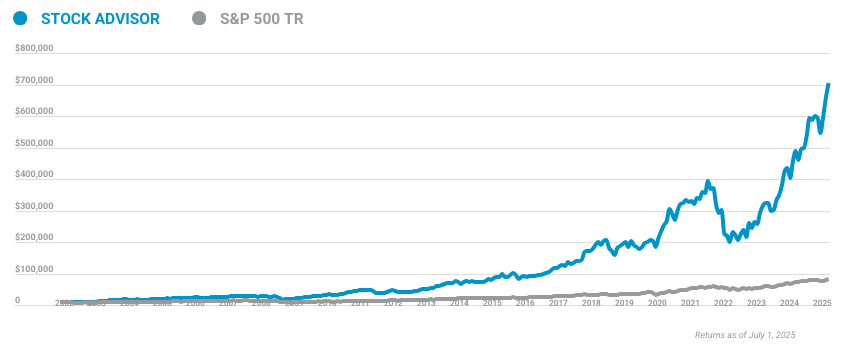
thirteen Steps to Investing Foolishly
- Change Your Life With Ane Calculation
- Trade Wisdom for Foolishness
- Treat Every Dollar as an Investment
- Open and Fund Your Accounts
- Avoid the Biggest Mistake Investors Make
- Discover Great Businesses
- Buy Your First Stock
- Cover Your Assets
- Invest Like the Masters
- When should I sell a stock?
- Retire in Style
- Pay Information technology Forward
- Make friends and influence Fools
Investing Tools
- Compare Stock Brokers
- Compare IRA Accounts
- Financial Calculators
Source: https://www.fool.com/investing/how-to-invest/stocks/stock-wash-sale-rule/
0 Response to "Is It Okay to Sell Stock for a Gain Then Repurchase It Again at a Lower Price?"
Postar um comentário